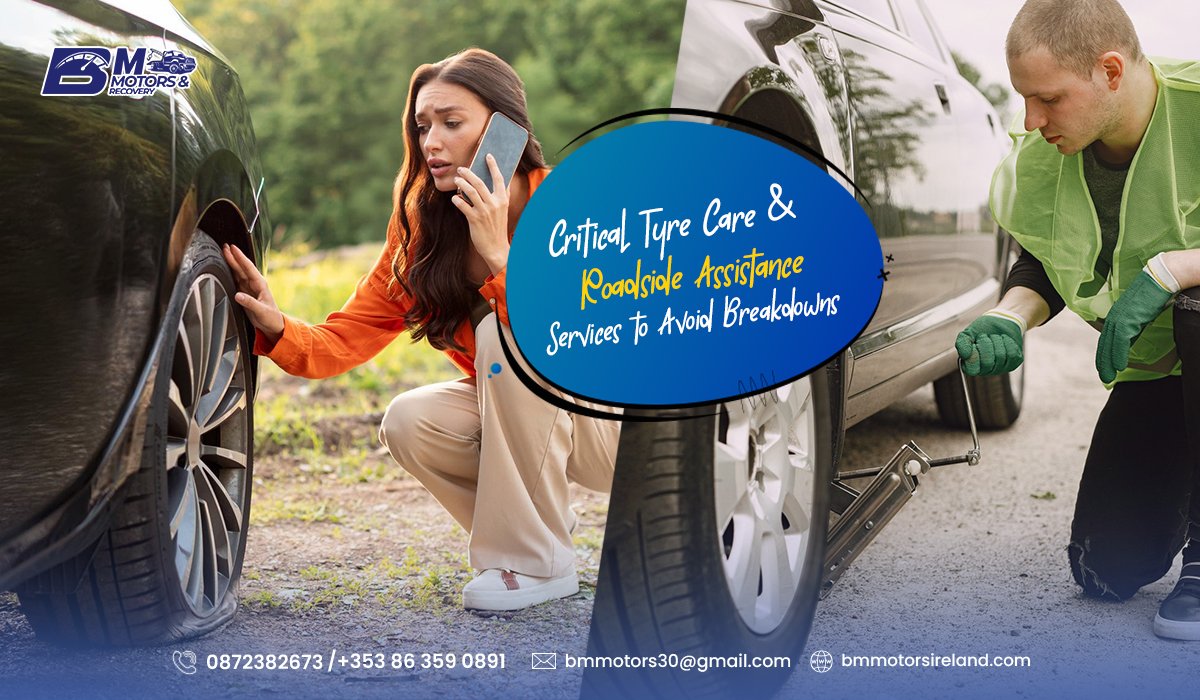
Your tyres serve as the sole point of contact between your vehicle and the asphalt. It means their upkeep directly influences handling, braking efficiency, and general road safety.
Accessing reliable Roadside assistance services in Tipperary ensures you are never left stranded, but staying proactive with maintenance is always the best first step. This guide provides straightforward, practical inspections local drivers can perform independently, details their importance for remaining legally compliant and avoiding accidents, and indicates exactly when to seek expert assistance.
You will discover the correct methods for assessing tyre pressure, applying the 20p coin check to monitor tread levels, identifying hazardous structural damage, and establishing straightforward upkeep routines that significantly lower the chances of a sudden blowout.
Why Is a Regular Tyre Pressure Check Crucial for Tyre Safety?
Consistently monitoring inflation levels ensures each tyre matches the specific specifications detailed by your vehicle manufacturer. Maintaining this balance keeps the tyre footprint working optimally, ensuring that traction, braking, and cornering remain completely reliable on slick or cold regional roads.
The correct inflation level also minimises rolling resistance, boosts fuel economy, and eliminates the build-up of extreme heat and irregular wear that frequently triggers sudden failures during motorway journeys or while transporting substantial loads.
Below are the details on ideal inspection intervals, outlining a quick step-by-step process, and explaining the distinct hazards associated with incorrect inflation levels.
Routine pressure monitoring delivers three distinct advantages:
(a) Superior traction and minimised stopping distances on damp roads, boosting overall security during unpredictable local weather.
(b) Enhanced fuel conservation by minimising rolling resistance, keeping your running costs lower.
(c) Uniform wear patterns that extend tyre longevity, reducing the frequency of costly replacements.
These straightforward checks require very little time but are highly effective at preventing more severe mechanical and safety hazards. The following section outlines a clear routine to keep you moving smoothly.
Frequency of Tyre Checks to Prevent Blowouts
Examine tyre inflation levels at a minimum once every month and invariably prior to embarking on extended journeys to minimise blowout risks and maintain steady handling across varying cargo weights.
Always take measurements when the rubber is completely cold, ideally after the vehicle has remained stationary for at least three hours or covered under 2 miles at a leisurely pace, as driving generates internal heat that skews readings upward.
Utilise a dependable pressure gauge at home, or request a quick verification from your mechanic during routine vehicle servicing, adjusting the levels according to current cargo weight and manufacturer guidelines. While onboard, Tyre Pressure Monitoring Systems are highly effective for detecting sudden air loss, manual verifications combined with a swift visual overview remain the most dependable preventative routine.
Safety Risks of Underinflated and Overinflated Tyres
Tyres lacking sufficient air flex excessively during movement, producing dangerous internal heat and wearing down rapidly, which escalates the likelihood of a structural failure during high-speed trips. This condition also reduces the effective contact patch, leading to accelerated wear along the outer edges and diminished wet traction, which drastically extends your required stopping distance.
Conversely, overinflated tyres focus the vehicle’s weight directly onto the middle of the tread pattern, shrinking the rubber’s contact with the road and lowering braking performance while creating an uncomfortable, harsh ride and causing rapid deterioration along the centre line.
Both scenarios compromise vehicular control; adhering strictly to recommended inflation figures strikes the ideal balance between traction, fuel conservation, and tyre longevity.
What Is the Legal Tyre Tread Depth and How Do You Measure It?
The statutory minimum tread depth requires a limit of 1.6 mm across the central three-quarters of the tread width and around its entire outer circumference. Possessing deeper tread patterns dramatically enhances stopping power in damp conditions and assists the vehicle in resisting dangerous aquaplaning. Drivers can easily monitor this depth using a dedicated measuring tool, checking the built-in wear indicators, or performing a straightforward 20p coin test at home.
Regular monitoring prevents test failures and mitigates the severe safety risks tied to diminished grip during rainy or icy spells. The table below outlines legal requirements, prudent recommendations for harsh weather, and standard monitoring practices so you can plan replacements accurately.
Legal and practical tread depth comparison
| Requirement / Condition | Measurement Method | Recommended Action |
| Legal minimum: 1.6mm | Tread wear indicators or gauge | Replace the tyre immediately if the tread drops below 1.6mm |
| Wet-weather recommendation: 3mm+ | 20p coin test or gauge | Plan a replacement soon to maintain optimal wet-weather grip |
| Winter/snow recommendation: 4mm+ | Professional gauge or specialist tyres | Mount specialised winter tyres or replace the current rubber if the depth is inadequate. |
This comparison highlights that statutory limits are merely a baseline; maintaining extra tread depth is a smart, practical measure when local driving conditions become challenging.
Performing the 20p Coin Test for Tyre Tread Depth
The 20p coin test serves as an exceptional, swift home verification technique: insert a 20p coin firmly into the primary grooves of the tyre tread and observe whether the outer border remains visible. If the outer rim stays completely hidden across multiple spots around the circumference, your tread depth is highly likely to meet or exceed the 1.6 mm statutory baseline. If that outer border is visible in any primary groove, the tyre has become unsafe and requires immediate replacement.
Be sure to test multiple sections of each wheel to detect irregular wear patterns early. For borderline findings or ahead of major road trips, confirm the results with a precise measurement gauge or seek an expert opinion before operating the vehicle.
Risks Of Driving with Illegal or Worn Tyres
Operating a vehicle on tyres below the statutory tread limit significantly extends your required stopping distance, elevates the likelihood of aquaplaning, and increases the probability of collisions during heavy downpours, while also risking legal penalties or failing roadworthiness tests.
Severely worn tread is directly connected to more severe injuries in transport mishaps, meaning that if a tyre drops below safe thresholds or encounters a fault while you are in transit, you should pull over safely and seek expert support immediately rather than continuing onwards.
When a vehicle is no longer safe to operate, requesting professional vehicle transport is the most secure decision you can make in advance. And if it occurs in the middle of the road, do not delay to call a reliable Roadside assistance service in Tipperary.
How To Identify Common Tyre Damage and When to Act
Conducting a visual check for structural splits, unusual bulges, embedded sharp objects, and sidewall ageing allows you to accurately determine how quickly you need to intervene. Keep a sharp eye out for structural defects like localised distortions, deep splits that expose internal cords, punctures within the main tread area, and dry rot cracking that indicates age-related deterioration.
Required actions vary from pulling off the road immediately to scheduling a swift repair or replacement at a local workshop.
The reference table below helps you categorise common tyre issues so you can easily decide whether to halt movement immediately or drive carefully to a nearby garage. Following the data, a brief note outlines local assistance choices if the vehicle cannot be driven.
Damage triage table
| Damage Type | Immediate Risk Level | Recommended Action |
| Bulge or bubble in the sidewall | High | Halt driving immediately; request professional assistance or transport |
| Deep cut exposing internal cords | High | Do not operate the vehicle; arrange a replacement as soon as possible |
| Embedded nail or small puncture | Medium | If located in the main tread area, a repair is often possible; inspect quickly. |
| Cracks or dry rot | Medium to High | Have the tyre inspected; replace if the degradation is deep or widespread |
Utilising this system ensures safety remains the top priority: structural degradation carries extreme risk and indicates you should stop driving and seek professional vehicle recovery.
Warning Signs of Tyre Damage: Cuts, Bulges, And Cracks
Distortions or air bubbles along the sidewall indicate an internal structural failure of the plies or cords and pose a hazard; halt your journey immediately and obtain expert help because continuing to drive on these defects can trigger a violent blowout. Splits that penetrate down to the internal layers, particularly on the outer sidewall, typically demand an outright replacement rather than a simple patch; minor cuts on the main tread can occasionally be repaired but require a prompt evaluation.
Fine cracks or dry rot around the rim bead or sidewall point to age-related weakening, which substantially increases failure risks during sudden temperature drops. If you spot any of these warning signs, avoid high-speed routes and take the help of a Roadside assistance service in Tipperary. They will arrange a professional inspection or vehicle transport right away.
When To Contact a Breakdown Recovery Service for Tyre Issues
Request professional assistance when your vehicle becomes completely immobile, a tyre displays visible structural failure such as severe bulging or exposed internal wire, you lack a functional spare wheel, or attempting a tyre swap at the side of the road would put your personal safety at risk.
If you sustain a hard impact from a pothole and subsequently notice unusual steering vibrations, a distinct pull to one side, or visible outer damage, avoid embarking on long trips and organise professional transport for a thorough mechanical assessment.
For motorists navigating local routes, assistance specialists operate around the clock to transport compromised vehicles safely to a workshop for swift repair or replacement.
Whenever you feel uncertain about the roadworthiness of your vehicle, reaching out to a dedicated specialist is always the wisest choice.
What Are the Best Car Tyre Maintenance Tips to Prevent Tyre Blowouts?
Avoiding sudden tyre failures relies on consistent inspections, sensible weight distribution, and mindful driving habits. Check inflation levels regularly, monitor tread depth along with overall condition, rotate the wheels at recommended intervals, and request a wheel alignment verification if you notice irregular wear or handling issues.
Avoid packing the vehicle beyond its rated capacity, reduce your speed before navigating deep potholes or high kerbs, and increase air pressure settings to accommodate heavier cargo loads to prevent overheating and premature deterioration.
The summary table below outlines essential checks, ideal intervals, and the simple tools needed to make maintenance straightforward.
Maintenance checks at a glance
| Check | Frequency | Tool / Action |
| Tyre pressure | Monthly and before extended trips | Trustworthy pressure gauge; adjust levels only when the rubber is cold |
| Tread depth | Monthly visual check plus coin test | Use a 20p coin or a dedicated tread depth measuring tool |
| Tyre rotation and alignment | Every 6 to 12 months or if wear is irregular | Schedule a professional garage visit or a wheel alignment check |
| Visual damage inspection | Monthly or following hard impacts | Search carefully for sidewall bulges, deep cuts, and embedded debris |
Incorporating these simple, regular actions into your routine lowers blowout risks while optimising handling performance and reducing your overall running costs over the lifespan of your tyres.
Your driving technique and vehicle loading habits directly influence tyre longevity: heavy payloads generate extra thermal stress, aggressive cornering rapidly degrades the outer shoulders, and frequent impacts with kerbs compromise sidewall strength. Regularly rotating positions and verifying wheel alignment helps distribute this wear evenly while ensuring your handling remains completely predictable.
Frequently Asked Questions
(1) What Should I Do If I Notice Uneven Tyre Wear?
Irregular tread wear generally points toward incorrect tracking, wheel imbalance, or worn suspension components. First, check your inflation levels and adjust them to match the manufacturer’s guidelines. If the irregular wear pattern continues to worsen, visit a local workshop to have your alignment and suspension system professionally inspected. Following a consistent rotation schedule also helps distribute wear evenly over time.
(2) How Can I Tell If My Tyres Need Replacing Before They Reach the Legal Limit?
While the statutory minimum sits at 1.6mm, replacing your tyres prior to hitting that threshold significantly elevates road safety. Aiming for a replacement at roughly 3mm provides far superior wet-weather traction and lowers the risk of aquaplaning. Use the 20p coin check; if the outer border remains visible within the main grooves, it is time to look for new tyres. Additionally, replace any tyre showing structural damage like deep splits, sidewall bulges, or severe dry rot regardless of depth.
(3) What Are The Benefits Of Regular Tyre Rotation?
Periodically changing the position of your tyres ensures they wear down at an even rate, extending their overall service life and keeping vehicle handling entirely predictable. Tyres experience different forces depending on their position on the vehicle, weight distribution, and your personal driving habits. Swapping them every 6,000 to 8,000 miles helps sustain maximum grip and saves you money in the long run.
(4) How Does Temperature Affect Tyre Pressure?
Ambient temperature changes influence internal air pressure noticeably, causing a shift of roughly 1 PSI for every 10°C change in temperature. Tyres typically lose pressure when conditions turn cold and gain pressure in extreme heat, making more frequent checks essential during seasonal transitions. Keeping your tyres at the correct pressure optimises safety, improves fuel economy, and maximises tyre life.
The Final Talk: Hiring A Reliable Name in the Industry
A vehicle with incorrect alignment will exhibit accelerated, irregular tyre wear and can feel unstable at higher speeds. If you discover a mechanical fault that cannot be remedied safely on your own, arrange for professional support instead of risking an accident; utilising a reliable Towing Service Tipperary or expert transport is the logical step when a safe roadside assistance solution is out of reach. If a routine check uncovers an issue that you cannot safely fix on your own, BM Motors & Recovery provides dependable 24/7 assistance and vehicle transport across the region to ensure your tyre repairs or replacements are handled smoothly. Relying on professional transport when your tyres are compromised or when you lack the necessary tools protects your personal safety and prevents secondary damage to your wheels or suspension components.